ISO C++ Parallel STL Benchmark on Perlmutter
This is a brief analysis of C++ parallel algorithms on Perlmutter. This page provides performance summary and sample code. For details (source code, how to build and run), please refer to this Github repo: https://github.com/weilewei/parSTL.
The main focus of this benchmark is on C++ parallel transform and sort algorithms, which are available in several parallel frameworks such as Intel HPX, Kokkos, TBB, gnu, and nvhpc. To conduct the benchmark, a vector of random numbers is first allocated and then subjected to a range of parallel algorithms. We demonstrate how parallel Standard Template Library (STL) algorithms can be used on Perlmutter, and how well different implementations perform.
If you’re interested in any pSTL algorithm or need a performance report, feel free to contact us via help.nersc.gov.
Parallel Transform and Sort on Perlmutter
Parallel Transform with gcc/clang/nvhpc/gnu on Perlmutter
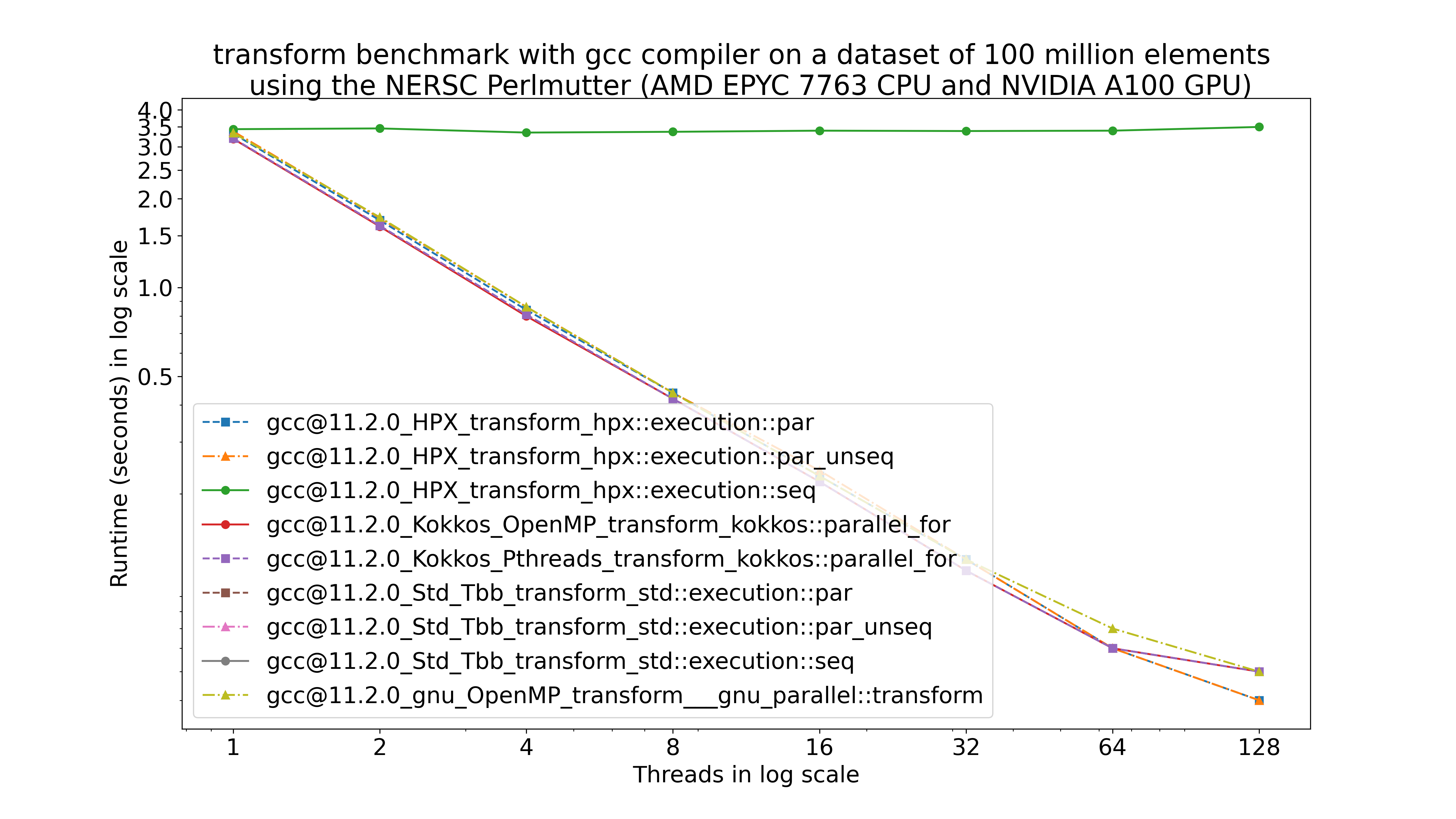 Transform with GCC@11.2.0
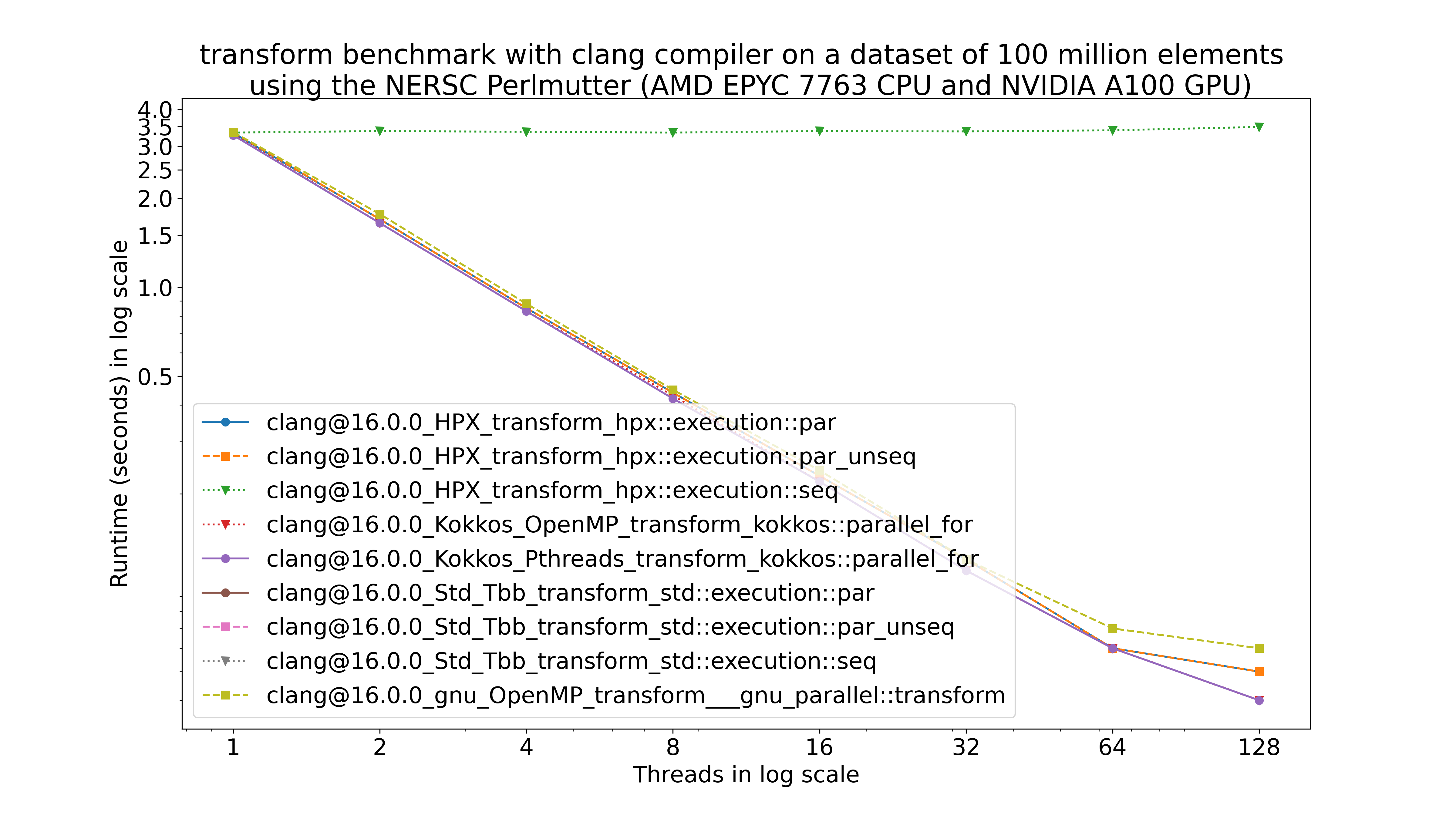 Transform with Clang@16.0.0
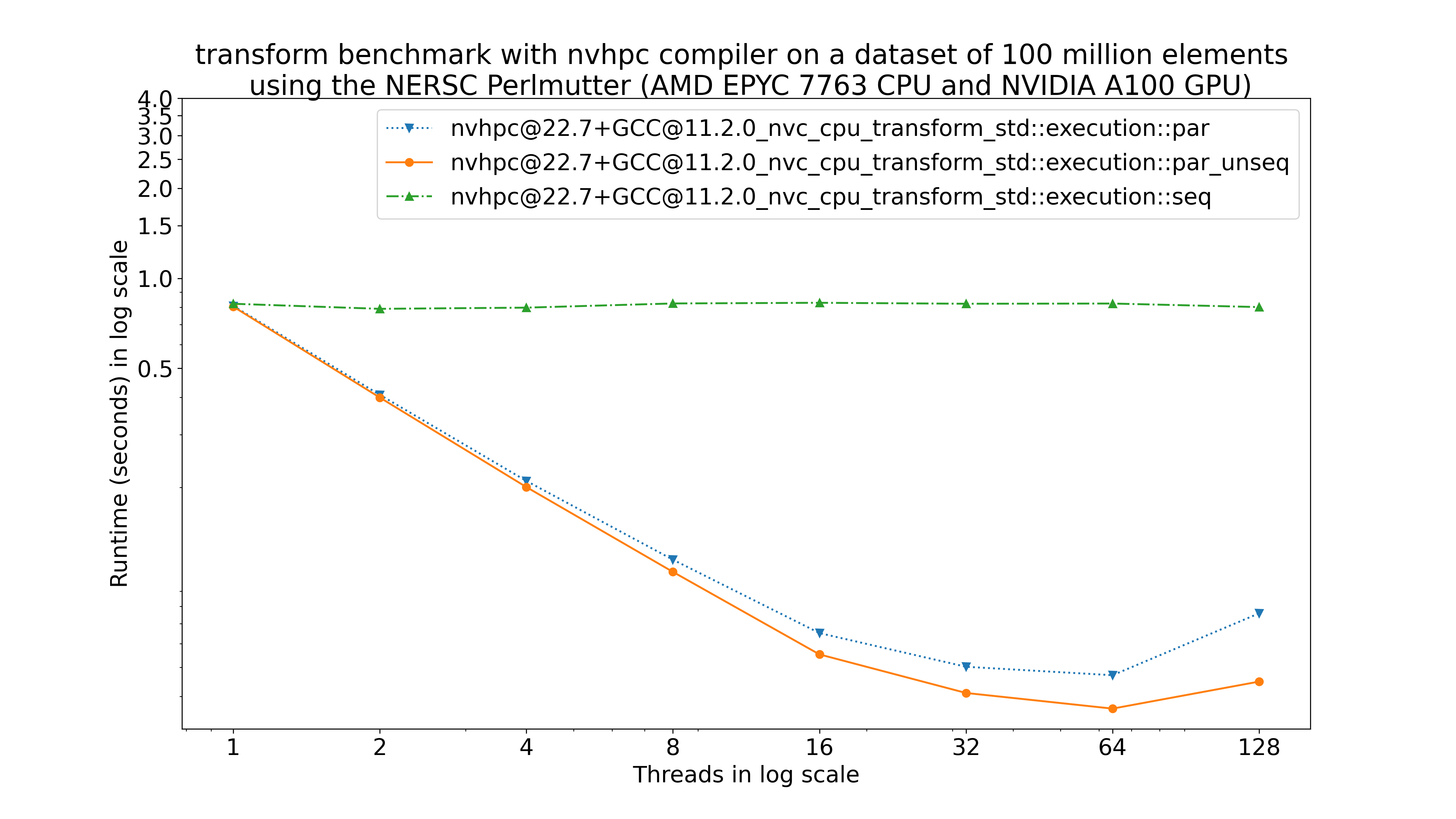 Transform with NVC++@22.7 Multicore
Parallel Sort with gcc/clang/nvhpc/gnu on Perlmutter
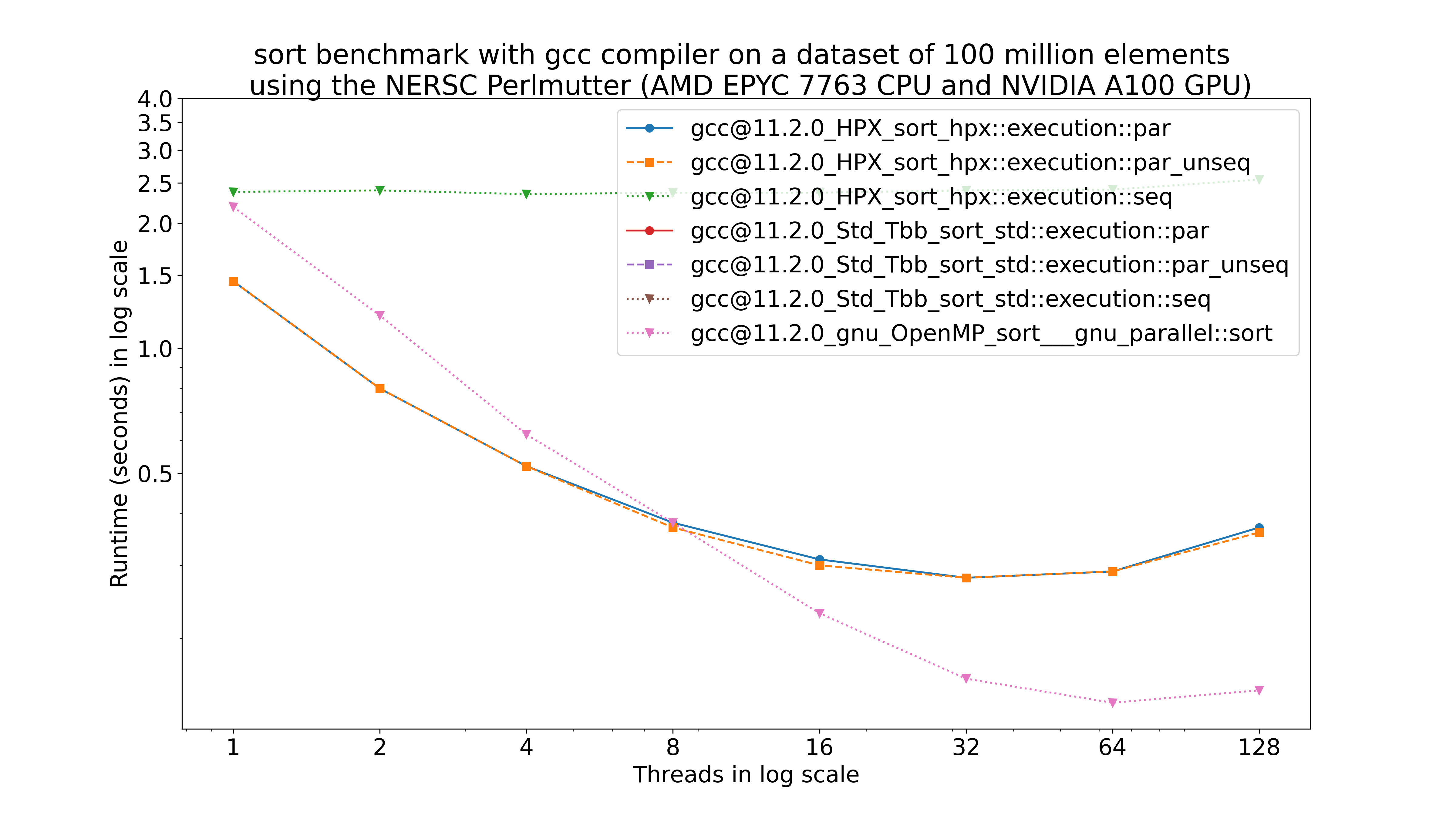 Sort with GCC@11.2.0
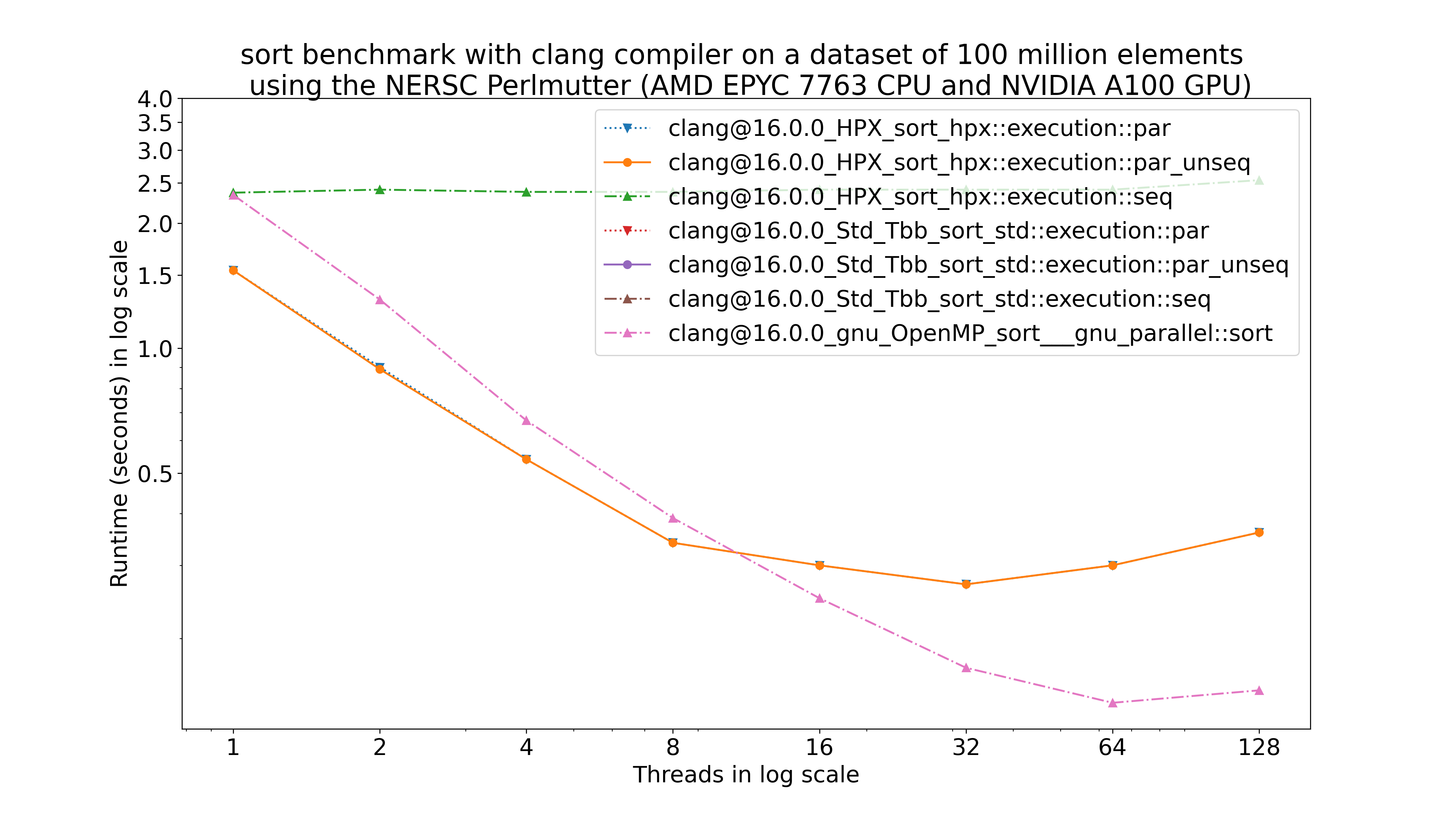 Sort with Clang@16.0.0
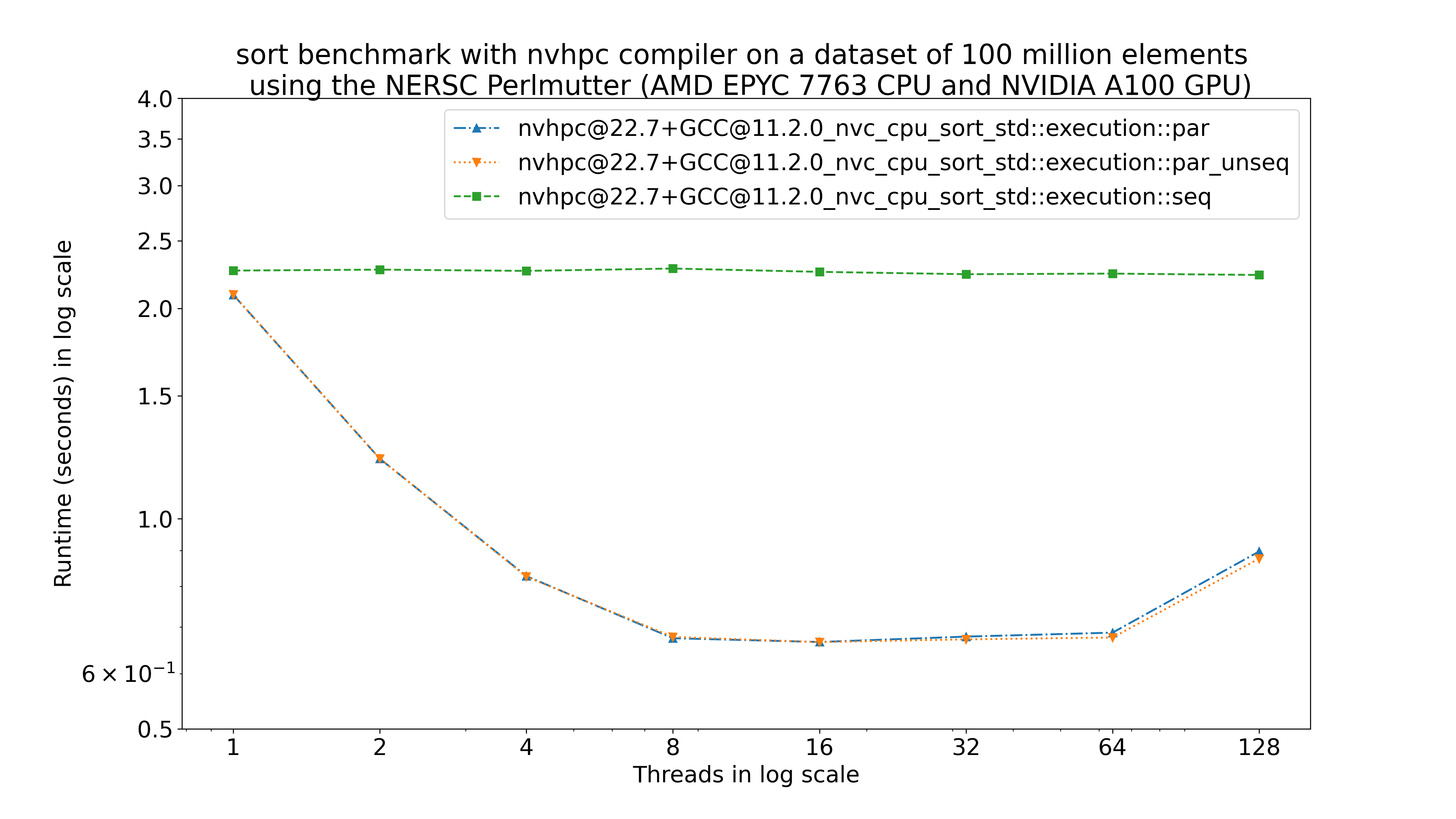 Sort with NVC++@22.7 Multicore
Transform and sort for applications that have no control thread count
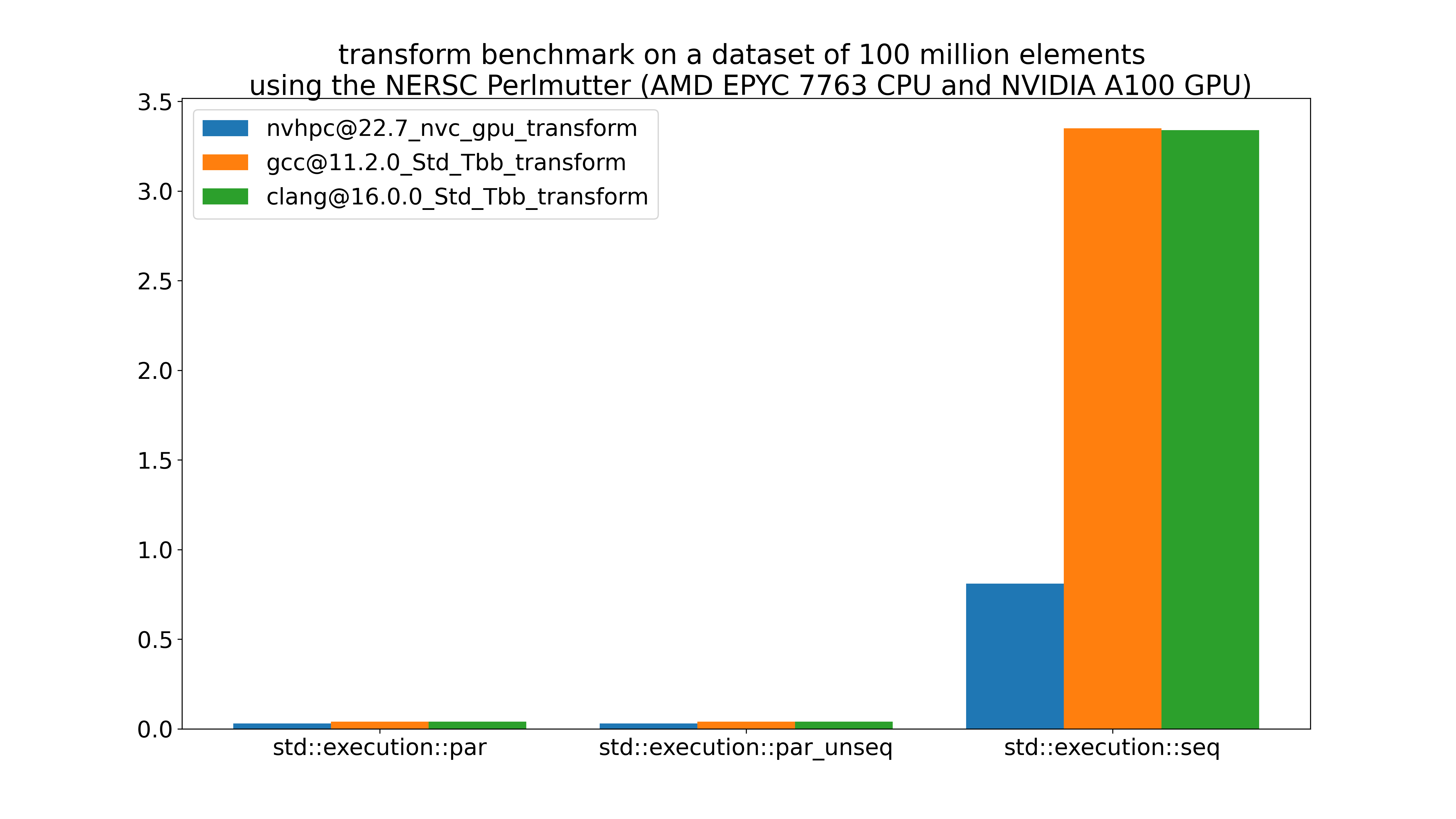 Transform with NVC++ gpu, Standard C++ with TBB and gcc/clang
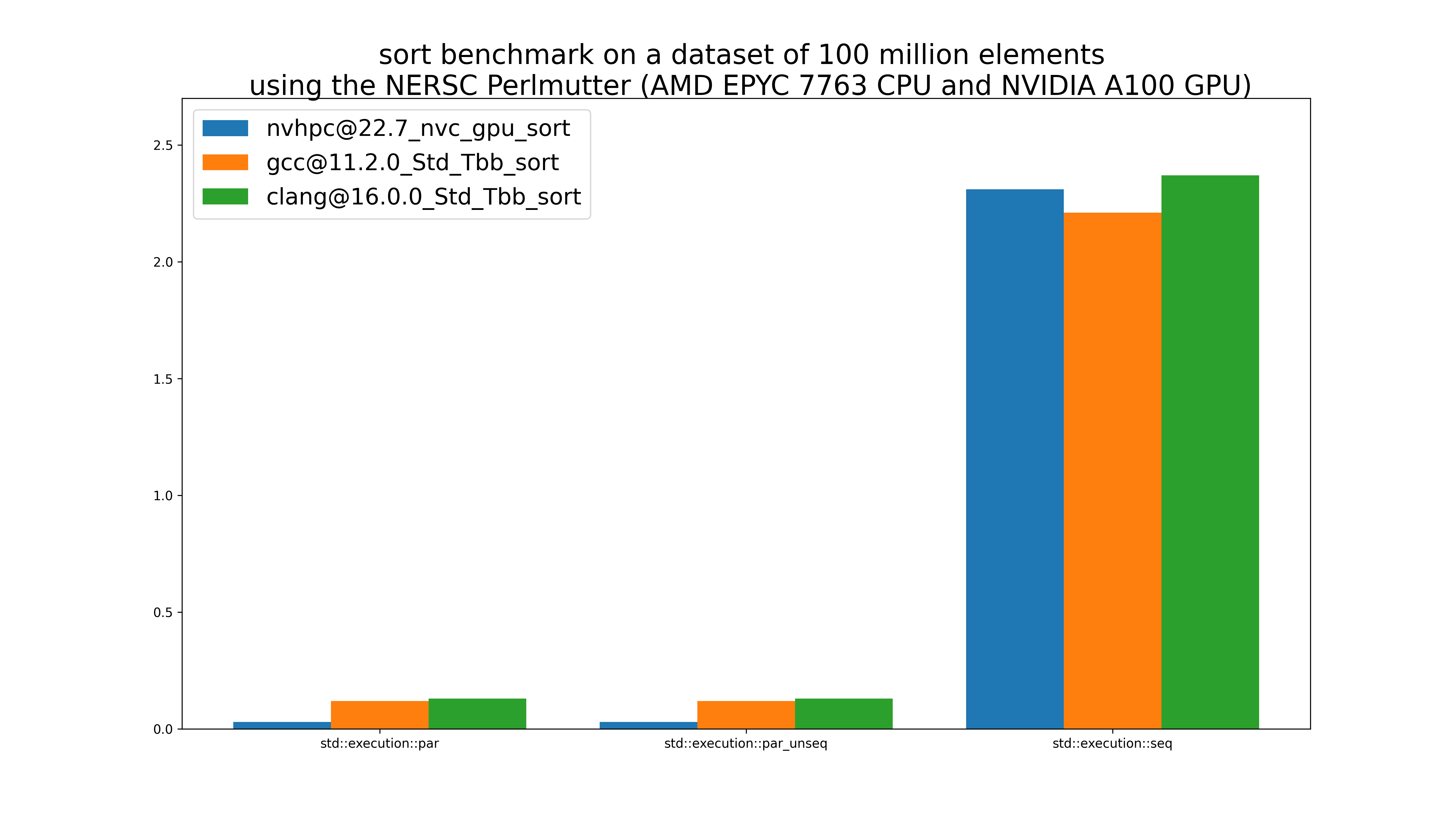 Sort with NVC++ gpu, Standard C++ with TBB and gcc/clang
Example code
- Standard C++ parallel transform and NVC++ parallel transform
```cpp std::transform(std::execution::seq, workVec.begin(), workVec.end(), workVec.begin(), { return std::tan(arg); });
std::transform(std::execution::par, workVec.begin(), workVec.end(), workVec.begin(), { return std::tan(arg); });
std::transform(std::execution::par_unseq, workVec.begin(), workVec.end(), workVec.begin(), { return std::tan(arg); }); ```
- HPX parallel transform
cpp
hpx::transform(hpx::execution::seq, workVec.begin(), workVec.end(),
    workVec.begin(), [](double arg){ return std::tan(arg); });
hpx::transform(hpx::execution::par, workVec.begin(), workVec.end(),
    workVec.begin(), [](double arg){ return std::tan(arg); });
hpx::transform(hpx::execution::par_unseq, workVec.begin(), workVec.end(),
    workVec.begin(), [](double arg){ return std::tan(arg); });
- Kokkos parallel transform
cpp
Kokkos::parallel_for("kokkos::parallel_for transform optimized version",
  Kokkos::RangePolicy<Kokkos::IndexType<int>, Kokkos::Schedule<Kokkos::Dynamic>>
  (0, length), KOKKOS_LAMBDA (const int& i) {
    workVec(i) = std::tan(workVec(i));
});
- GNU parallel transform
cpp
__gnu_parallel::transform(workVec.begin(), workVec.end(),
    workVec.begin(), [](double arg){ return std::tan(arg); });
- Taskflow parallel transform
```cpp tf::Executor executor(num_threads);
tf::Taskflow t1; t1.for_each(workVec.begin(), workVec.end(), [] (double& arg) { arg = std::tan(arg);}); ```